
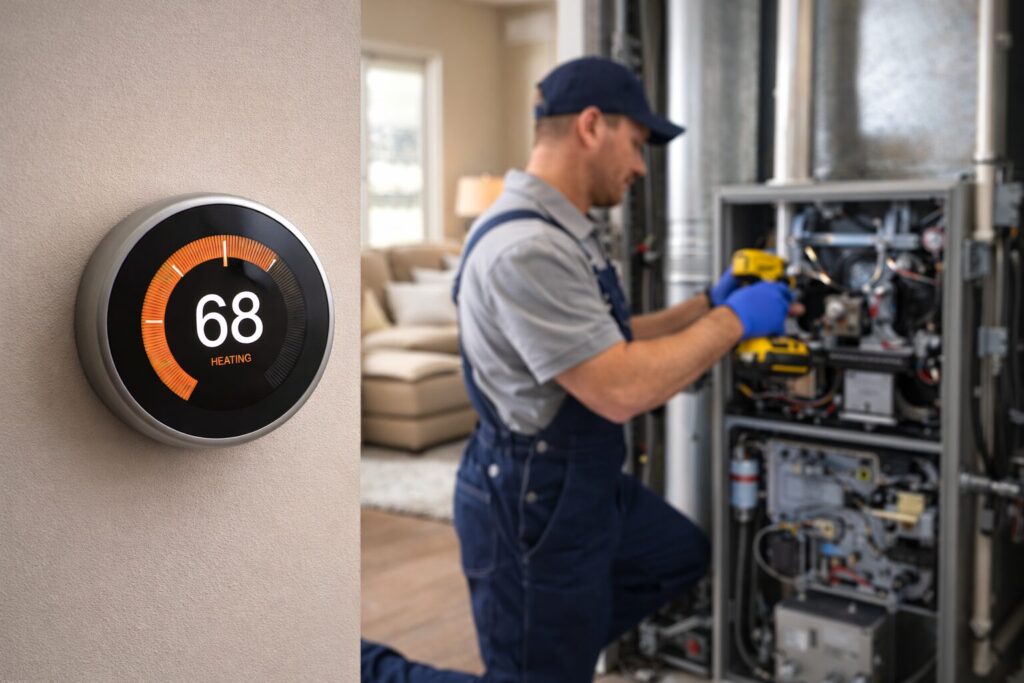
If your heating bill spikes every winter, you’re not alone — and you don’t necessarily need a new furnace to get it under control. Often, the biggest “lever” is simply how your thermostat is set day-to-day.
Below are practical, research-backed thermostat settings that balance comfort, efficiency, and protecting your home during Central Indiana cold snaps.
The best winter thermostat setting when you’re home
A solid starting point for most households is around 68°F–70°F while you’re awake and at home. This is the range the U.S. Department of Energy highlights as an energy-saving target in winter while you’re awake.
If your home feels chilly at 68°F, it doesn’t always mean your furnace is failing. Drafts, insulation gaps, and dirty filters can make a home feel cold even when the system is running normally. (More on filters below.)
The easiest way to save: use temperature “setbacks”
The DOE’s guidance is clear: you can save as much as 10% per year on heating and cooling by adjusting your thermostat back 7°–10°F for about 8 hours a day (like overnight or while you’re away).
A simple winter schedule many homeowners can live with:
- Daytime (home/awake): 68–70°F
- Sleeping / away: reduce 7–10°F for ~8 hours
One important caveat: heat pumps
If you have a heat pump, aggressive setbacks can sometimes trigger more “aux/emergency heat” usage (which can cost more). If you’re not sure what system you have, Absolute Comfort can help you identify it and set a schedule that fits your equipment and comfort goals.
Smart thermostats: what savings are realistic?
If you’re considering an upgrade, ENERGY STAR reports that, on average, ENERGY STAR–certified smart thermostats save about 8% on heating and cooling bills (around $50/year) — though real savings vary by home, climate, and habits.
In practice, the biggest benefit is consistency: the thermostat follows the schedule even when life gets busy.
Don’t overlook the #1 HVAC “efficiency killer”: a dirty filter
Even the best thermostat schedule can’t help much if airflow is restricted.
ENERGY STAR recommends checking your HVAC filter monthly during heavy-use seasons (like winter). If it looks dirty after a month, change it — and at minimum, replace it every 3 months.
A clogged filter makes your system work harder, can reduce comfort, and can contribute to higher bills.
Quick winter thermostat FAQ
Is it safe to turn the heat way down when I’m away?
For most homes, you want to keep the house warm enough to protect plumbing and finishes. If you’re traveling for an extended period, keep a conservative temperature and consider cabinet doors open under sinks on exterior walls.
Will constantly changing the thermostat damage my system?
Normal day/night scheduling is exactly what programmable and smart thermostats are for. Big, rapid swings aren’t usually necessary — steadier routines tend to feel better and perform better.
Find the best thermostat setting for winter comfort and savings in Central Indiana. Learn DOE-backed temperature targets, setback schedules, and smart thermostat tips.