
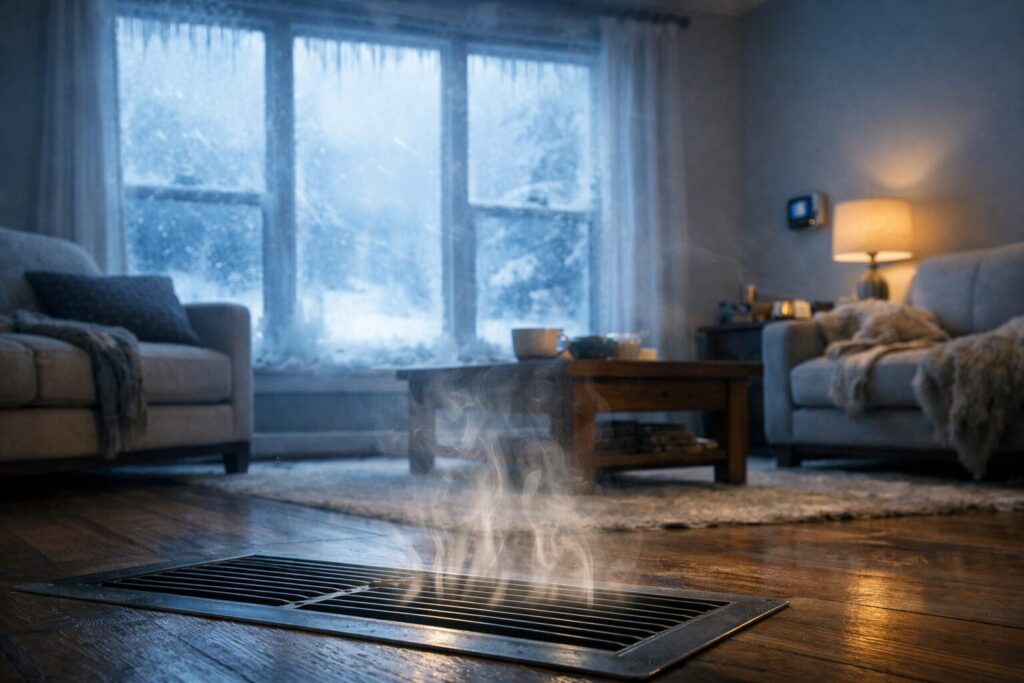
When temperatures across Indiana dropped into the single digits (and below), many homeowners noticed something unsettling:
Your furnace didn’t just cycle on and off.
It ran.
And ran.
And ran.
If it felt like your system never caught a break, you’re not imagining it. During sub-zero cold snaps, your HVAC system shifts from “comfort mode” to “survival mode.”
Let’s break down what happened — and what it may have done to your system.
1. Why Your Furnace Ran Nonstop
When outdoor temperatures plunge well below freezing, your furnace has to work much harder to maintain 68–72°F indoors.
Here’s why:
- Heat naturally moves toward cold. The greater the temperature difference, the faster your home loses heat.
- Wind increases heat loss (common during Midwest cold snaps).
- Older windows, doors, and insulation amplify the strain.
- If temperatures dip below your system’s design rating (many systems are sized for typical winter lows — not Arctic blasts), it may run nearly continuously.
Continuous operation isn’t automatically bad.
But it does increase system stress.
2. Freeze–Thaw Cycles: The Hidden Strain
Indiana winters aren’t just cold — they fluctuate. One week: below zero. The next: 45°F and melting snow.
Those freeze–thaw cycles affect more than your driveway.
What Freeze–Thaw Does to HVAC Systems:
- Condensate drain lines can freeze, then thaw and refreeze.
- Exterior vent pipes expand and contract, potentially loosening seals.
- Heat pumps (if you have one) must repeatedly defrost outdoor coils.
- Moisture buildup can affect connections and components.
That repeated expansion and contraction stresses plastic fittings, seals, and joints — especially on high-efficiency furnaces.
3. What Sub-Zero Operation Does to Your Furnace
During extreme cold, your system experiences:
🔥 Longer Burn Cycles
The heat exchanger stays hot for extended periods, increasing metal expansion and contraction.
⚙️ Increased Blower Motor Runtime
More hours = more wear on bearings and belts.
🧠 Strain on Electrical Components
Capacitors, control boards, and ignition systems work harder in extreme cold.
🌬 Dirty Filter Amplification
If your filter was even slightly dirty before the cold snap, airflow restriction made the furnace work even harder.
The result?
Your system likely logged more runtime hours in two weeks than it normally would in a month.
4. Signs Your Furnace Took a Hit
After a cold snap, watch for:
- Louder than normal operation
- Short cycling (turning on and off quickly)
- Uneven heating between rooms
- Increased energy bills
- Burning dust smell that doesn’t fade
- Weak airflow
These don’t always mean something is broken — but they do mean your system worked overtime.
5. When to Schedule a Post-Winter Inspection
The best time to inspect your furnace isn’t when it breaks down next December.
It’s early spring.
Here’s why:
- HVAC companies are less booked than peak summer/winter.
- Small issues (loose wires, cracked fittings, worn belts) can be caught early.
- You avoid emergency pricing later.
- You ensure your AC system is ready before the first 80° day hits Indiana.
If your furnace ran nonstop during the cold snap, it’s smart to schedule a system check once temperatures consistently stay above freezing.
6. Why a Spring HVAC Tune-Up Matters
A professional spring tune-up typically includes:
- Full system inspection
- Electrical connection check
- Cleaning of components
- Filter evaluation
- Safety testing
- Thermostat calibration
- AC system prep
Think of it like changing your car’s oil after a long road trip.
Your furnace just completed a marathon.
Now it’s time for recovery.
Don’t Wait Until Next Winter
Extreme cold exposes weaknesses in HVAC systems. Small issues that developed in January can become full breakdowns by next December.
If your furnace worked overtime during Indiana’s last cold snap, now is the time to give it attention — before summer heat and next winter’s freeze put it under pressure again.
📞 Schedule Your Spring HVAC Tune-Up Today
Protect your system.
Improve efficiency.
Lower future repair risk.
Contact us today to book your spring HVAC inspection and tune-up — and keep your home comfortable in every season.