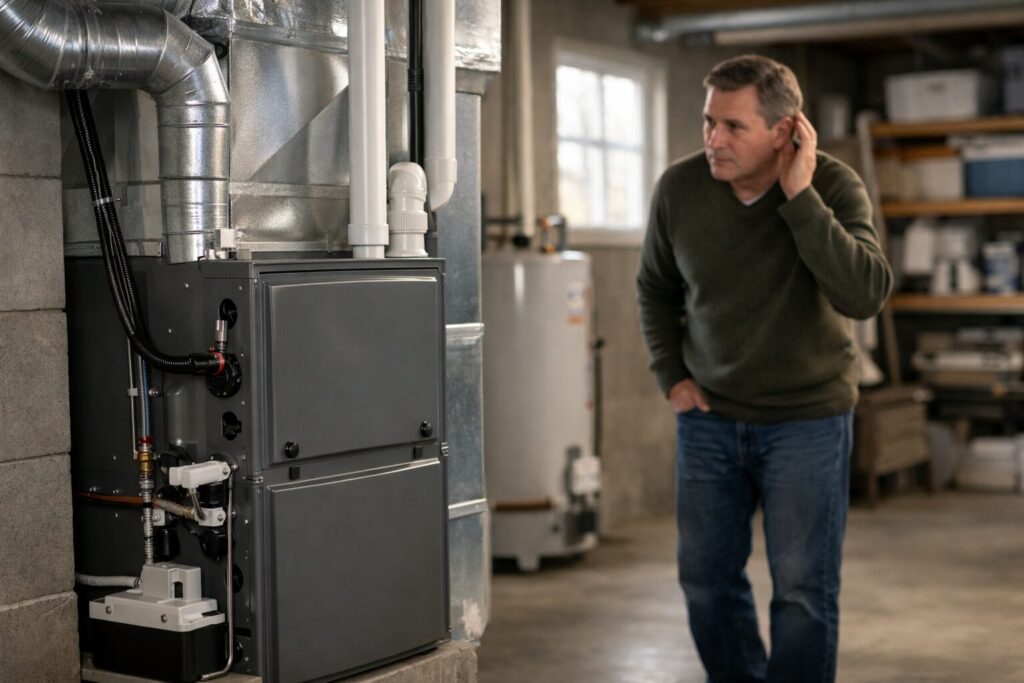
Your furnace should quietly deliver warmth throughout your home — not sound like a mystery machine every time it kicks on. While some noises are just part of normal operation, others can be early warnings of trouble. By understanding what those sounds mean, you can catch small issues before they turn into costly repairs or safety hazards.
🔊 Quiet Hum — Normal, but Know What It Means
A soft humming sound when your furnace turns on is usually nothing to worry about — it’s just the blower motor working to push warm air through your ducts. The same goes for gentle whooshing as the air flows. However, if that hum gets louder than usual or persists throughout the heating cycle, it might point to motor or electrical issues that warrant a closer look.
💥 Banging or Boom Sounds — Don’t Ignore Them
If your furnace emits loud bangs or booms, that could be caused by delayed ignition of gas inside the combustion chamber. Gas can accumulate before it lights, resulting in a mini “explosion” that causes the furnace to vibrate and bang. This isn’t just noisy — it can crack internal components like the heat exchanger, which can be dangerous. Turn off the system and have a professional inspect it.
🎧 High-Pitched Squeals or Screeches — A Sign of Wear
A sharp, high-frequency squeal often suggests a mechanical issue. This could be due to worn bearings, a deteriorating blower belt, or misaligned fan components. These squeals typically mean something inside the system isn’t rotating smoothly — and left unchecked, the problem can become more serious.
🛠️ Scraping or Grinding Noises — Metal Meets Trouble
If what you hear sounds like metal scraping metal, it’s a signal that parts like the blower wheel may be damaged or rubbing against other components. This isn’t a sound you want to live with — continuing to run the furnace that way can cause further damage and shorten the life of critical parts.
🐝 Buzzing or Rumbling — Loose or Failing Components
A buzzing noise can mean loose electrical connections or components vibrating inside the unit. A low rumble is sometimes normal, but persistent rumbling, especially at startup or shutdown, can indicate an issue with fuel combustion or burner operation, which should be checked by a technician.
💨 Whistling — Think Airflow Restriction
A furnace that whistles is essentially whistling for more air. This commonly happens when filters are dirty or clogged, restricting airflow through the system. Often a simple filter change will reduce the sound — but if it continues, there may be a deeper airflow or duct issue.
🔁 Clicking — Startup or Something Else?
A single click when the furnace ignites is normal — that’s the ignitor doing its job. But repeated clicking or a click that happens throughout the heating cycle can indicate control panel malfunctions, ignition problems, or faulty sensors. If the furnace is clicking and failing to start properly, contact a professional.
🧠 Tips for Homeowners
Here are a few simple steps you can take before calling for service:
- Change your air filter regularly — this reduces stress on the blower and often eliminates whistling or humming issues.
- Listen for when the noise happens — startup, shutdown, or during steady operation can help diagnose the cause.
- Note any changes over time — a noise that gets progressively louder is a stronger sign of wear.
🔍 When to Call a Pro
If you’re ever unsure what a sound means — especially if it’s loud, persistent, or unusual — it’s safer to have one of our HVAC technicians take a look. Some noises can signal serious issues that, if ignored, could lead to inefficiency, breakdowns, or even safety risks like cracked heat exchangers and carbon monoxide leaks.
Your furnace deserves regular attention, just like the other systems in your home. Knowing what to listen for can help you catch small problems early and keep your heating system running smoothly — and quietly — all winter long.