
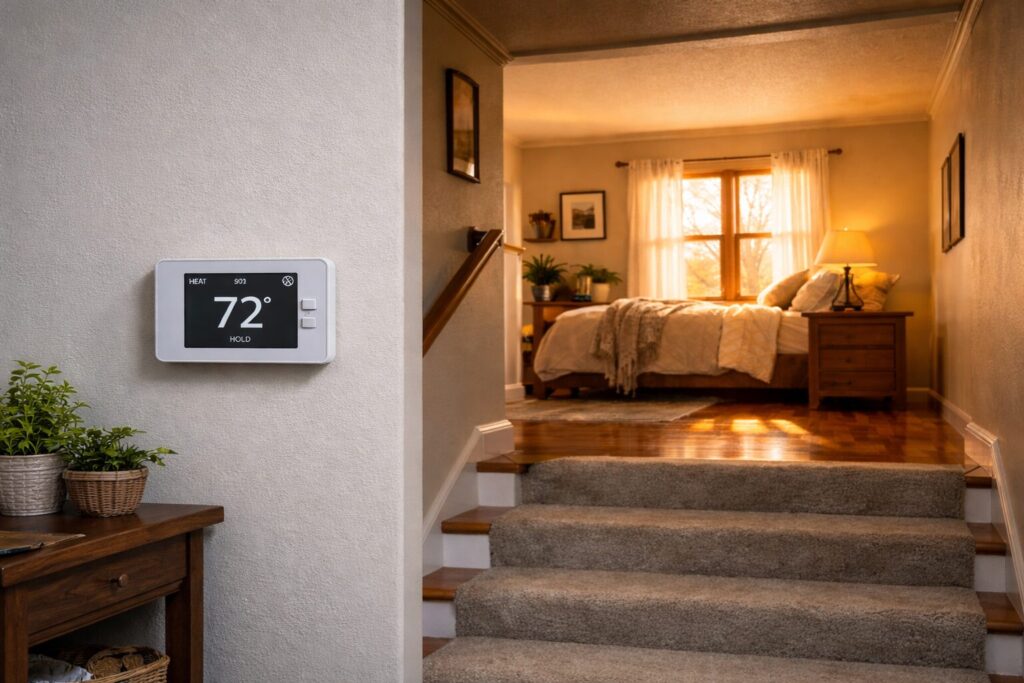
If your upstairs suddenly feels much warmer than the rest of your house lately, you’re not imagining it. Early spring in Indiana often brings strange temperature swings that can make some rooms feel comfortable while others feel stuffy or overheated.
Cold mornings, mild afternoons, and stronger sunshine all affect how heat moves through your home. During this time of year, many homeowners notice that upstairs bedrooms feel warmer than the rest of the house—even while the heating system is still running.
Understanding why this happens can help you keep your home comfortable while the seasons transition.
Heat Naturally Rises
One of the main reasons upstairs rooms feel warmer is simple physics: warm air rises.
When your furnace runs during colder mornings, heated air circulates throughout the house. As that warm air moves upward, it collects on the upper floors. Over time, this can cause upstairs rooms to become noticeably warmer than rooms on the main level.
Even if the thermostat says your home is at the correct temperature, the heat distribution may not be completely balanced.
The Sun Is Getting Stronger
By early March, the sun sits higher in the sky than it did during the middle of winter. That means more sunlight enters your home through windows, especially on upper floors.
Rooms that receive direct sunlight can warm up quickly during the afternoon. While the furnace may still be programmed to maintain winter comfort levels, the additional solar heat can push upstairs temperatures higher than expected.
Daily Temperature Swings
Indiana weather during late winter and early spring often changes quickly throughout the day.
Cold mornings require your heating system to run regularly. But by afternoon, outdoor temperatures may rise enough that your home no longer needs as much heat.
If your system continues cycling as it normally would during winter, the extra heat can accumulate upstairs.
Airflow Imbalances in Your HVAC System
Another reason some rooms feel warmer than others is uneven airflow throughout the home.
If more heated air is being delivered to upstairs vents than necessary, those rooms may warm up faster than the rest of the house. This can happen due to:
- ductwork design
- partially closed dampers
- blocked return vents
- furniture covering air registers
Even small airflow restrictions can change how heat moves through the house.
Insulation and Heat Retention
Upper floors sometimes retain heat more easily than lower levels. Warm air collects near ceilings and can remain trapped in those areas longer.
In homes where attic insulation or ventilation isn’t ideal, this effect can become even more noticeable during seasonal transitions.
Signs Your System May Need a Small Adjustment
While some temperature difference between floors is normal, certain signs may indicate that your HVAC system could benefit from a quick check.
You may notice:
- upstairs rooms feeling stuffy or overly warm
- the thermostat showing a comfortable temperature while bedrooms feel hot
- frequent thermostat adjustments throughout the day
- uneven comfort between floors
These issues often become more noticeable as winter winds down.
Small Adjustments Can Improve Comfort
The good news is that many temperature imbalance issues can be improved with relatively simple adjustments.
An HVAC technician may be able to help by:
- checking airflow balance in your ductwork
- adjusting dampers to better distribute heated air
- inspecting vents and returns for blockages
- preparing your system for the upcoming cooling season
Early spring is actually an ideal time to evaluate how your system performed during winter and make small improvements before warmer weather arrives.
Getting Your System Ready for Spring
As Indiana transitions toward spring, your heating system will soon shift toward cooling season. Addressing comfort issues now can help ensure your home stays balanced and comfortable in the months ahead.
If your upstairs consistently feels warmer than the rest of the house, a professional inspection can help identify airflow or system adjustments that may improve comfort throughout your entire home.