
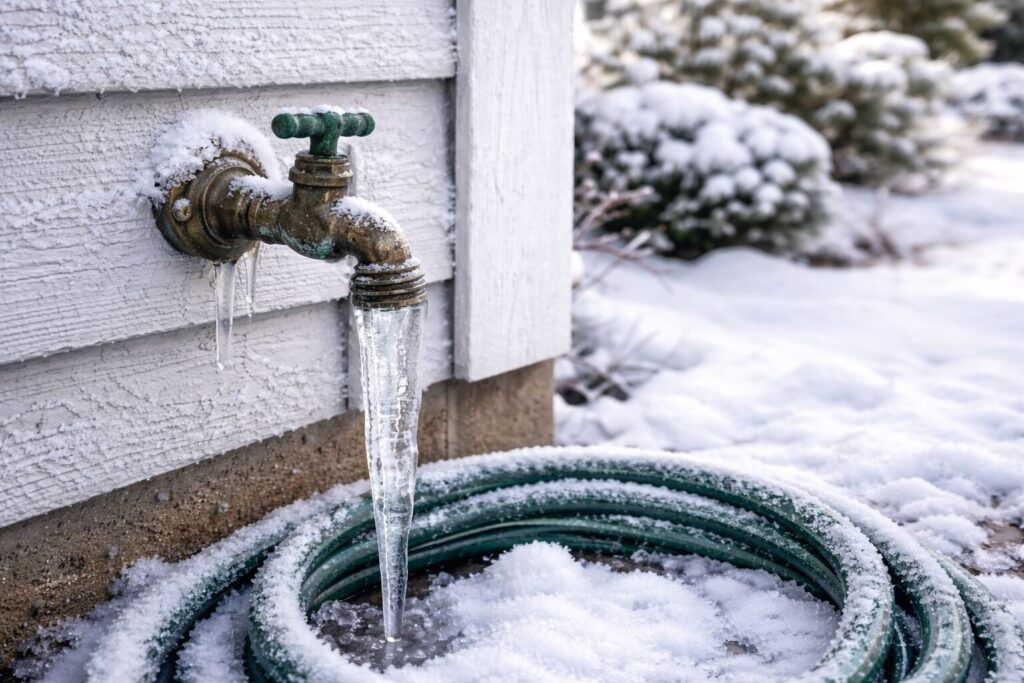
As temperatures drop across Central Indiana, most homeowners are focused on keeping their homes warm and comfortable. But while you’re thinking about your furnace and thermostat, there’s another winterizing task that deserves your attention—one that could save you from hundreds or even thousands of dollars in water damage.
Your outdoor spigots, also called hose bibs, are especially vulnerable when freezing temperatures arrive. Understanding how ice damages these fixtures and taking simple preventive steps now can protect your home from a plumbing disaster this winter.
The Hidden Danger of Frozen Spigots
When water freezes, it expands—and that’s where the trouble begins. Water trapped in your outdoor spigot or the pipe behind it can freeze solid when temperatures drop below 32°F. As the ice expands, it creates tremendous pressure against the pipe walls. This pressure can crack the pipe, split open the spigot, or cause the entire fixture to burst.
The most insidious part? You might not know there’s a problem until spring arrives. A frozen pipe can remain frozen all winter long, showing no signs of damage. But once the ice thaws and water starts flowing again, you may discover water pouring into your basement, flooding your crawl space, or soaking the interior walls of your home.
The Real Cost of Frozen Pipe Damage
The financial impact of a burst pipe can be staggering. According to recent industry data, homeowners can expect to pay between $400 and $2,000 just to repair or replace the damaged pipe itself. But that’s only the beginning.
The water damage caused by a burst pipe often costs significantly more than the plumbing repair. Water can soak into insulation, damage drywall, ruin flooring, and create the perfect environment for mold growth. Total water damage restoration can range from $5,000 to $50,000 depending on the extent of the flooding and how long the water remained before cleanup began.
Many homeowners are surprised to learn that a burst outdoor spigot can send up to 10 gallons of water per minute into their homes. Even a few hours of undetected leaking can cause catastrophic damage to your property and belongings.
Why Outdoor Spigots Are So Vulnerable
Unlike the pipes inside your home, outdoor spigots don’t benefit from your home’s insulation or heating system. They’re exposed directly to freezing temperatures, making them the most vulnerable points in your plumbing system.
The danger increases dramatically if you leave a garden hose connected to the spigot during winter. A connected hose traps water inside the spigot and connecting pipe, preventing proper drainage. This trapped water freezes, expands, and creates the pressure that leads to burst pipes.
Simple Steps to Prevent Ice Damage
The good news? Protecting your outdoor spigots from ice damage is straightforward and inexpensive. Here’s what Central Indiana homeowners should do before the first hard freeze:
Disconnect and Drain Your Hoses
The most important step is also the simplest: disconnect all garden hoses from outdoor spigots before freezing weather arrives. Drain the hoses completely and store them indoors for the winter. This single action prevents water from becoming trapped in the spigot connection.
Shut Off the Water Supply
Locate the shut-off valve inside your home that controls water flow to each outdoor spigot. These valves are typically found in your basement, crawl space, or utility area. Turn the valve clockwise until it stops to shut off the water supply completely.
Drain the Remaining Water
After shutting off the indoor valve, go outside and open each outdoor spigot to allow any remaining water in the line to drain out. Leave the outdoor faucet in the open position throughout winter. This prevents pressure buildup from any water that might freeze inside the pipe.
Install Insulated Covers
Outdoor faucet covers made from foam or insulated fabric provide an extra layer of protection against freezing temperatures. These inexpensive covers fit snugly over the spigot and can be found at any hardware store for just a few dollars. They’re quick to install and can make a significant difference on those coldest nights.
Seal Any Gaps
Check the exterior wall where your spigot pipe penetrates your home. Use caulk to seal any openings or gaps that allow cold air to reach the pipe inside your wall. This simple step helps keep the pipe warmer and reduces the risk of freezing.
Consider Upgrading to Frost-Free Spigots
If you find yourself battling frozen spigots year after year, it might be time to upgrade to frost-free hose bibs. These specially designed fixtures extend several inches into your home, placing the shut-off valve in a warmer location beyond the reach of freezing temperatures. Frost-free spigots also feature a self-draining design that prevents water from pooling in the faucet.
While frost-free spigots require professional installation and cost more upfront than traditional spigots, they provide superior protection and require much less maintenance each winter. For Central Indiana homeowners dealing with harsh winter conditions, this upgrade can provide valuable peace of mind.
What to Do If Your Spigot Freezes
Despite your best prevention efforts, you might still encounter a frozen spigot. If you turn on an outdoor faucet and no water comes out, or only a trickle appears, the pipe has likely frozen. Here’s what to do:
- Leave the spigot open
- Apply gentle heat to the pipe using a hair dryer, heating pad, or heat tape—never use an open flame
- Work slowly along the pipe from the open end toward the frozen section
- Watch for water to start flowing, which indicates the ice is melting
- Call a professional plumber immediately if you suspect the pipe has already burst
Protect Your Home This Winter
Your outdoor spigots might seem like minor fixtures, but their failure can cause major problems. The small amount of time it takes to winterize these faucets is nothing compared to the stress, expense, and disruption of dealing with burst pipes and water damage.
As we head into the coldest months of the year, take a few minutes to protect your outdoor plumbing. Disconnect those hoses, shut off the water supply, drain the lines, and install insulated covers. These simple actions can save you from a winter plumbing emergency.
At Absolute Comfort, we understand that keeping your home comfortable and safe goes beyond heating and cooling. If you have questions about protecting your plumbing during winter or need help with any aspect of your home’s comfort systems, we’re here to help. Don’t wait until ice damage strikes—take action now to protect your home.