
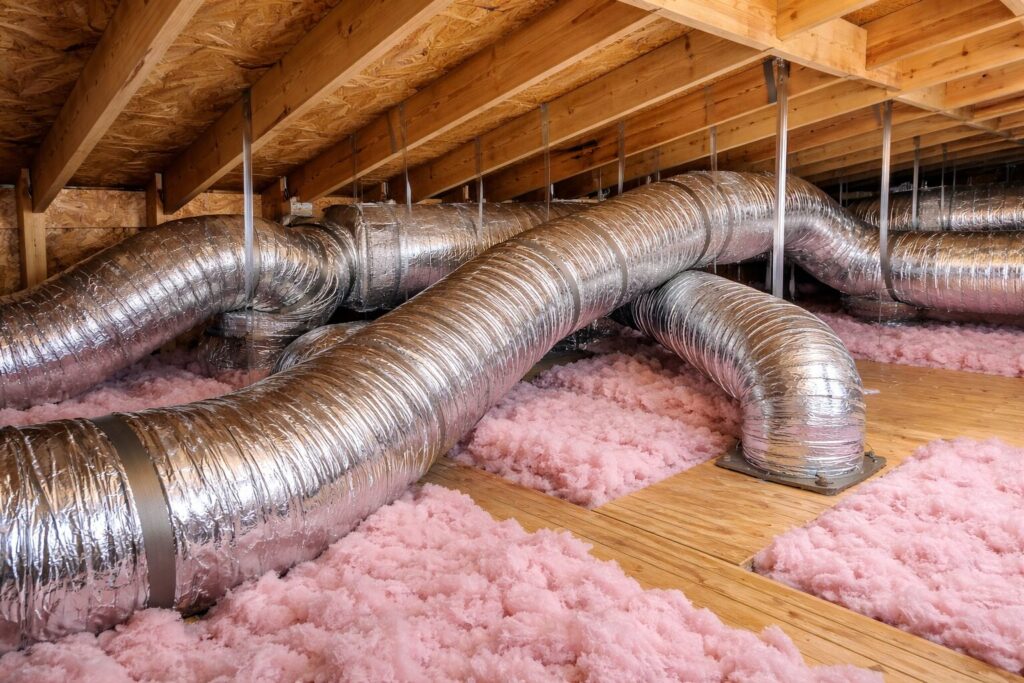
Your HVAC system works hard to keep your Central Indiana home comfortable year-round. But what if we told you that a significant portion of the heated and cooled air you’re paying for never actually reaches your living spaces? For many homeowners, poorly insulated attics and ductwork are silently draining both comfort and cash from their homes—often without them even realizing it.
Understanding where and how your home loses energy is the first step toward reclaiming control of your utility bills and creating a more comfortable living environment.
The Shocking Truth About Heat Loss
According to the Environmental Protection Agency, homeowners can save an average of 15% on heating and cooling costs—or about 11% on total energy costs—simply by properly air sealing and insulating their attics, floors over crawl spaces, and basements. For Indiana families facing climbing monthly electric bills that translates to substantial yearly savings.
But where exactly is all that expensive conditioned air going?
Research shows that up to 25% of a home’s heat loss occurs through a poorly insulated attic. Think about that for a moment: one-quarter of the warmth you’re paying to generate during those bitter Indiana winters is simply floating up through your ceiling and escaping into the atmosphere. During summer months, the reverse happens—superheated attic air radiates down into your living spaces, forcing your air conditioner to work overtime.
Meanwhile, your ductwork may be bleeding even more energy. Studies indicate that leaky ducts can lose up to 30% of conditioned air as it travels through your home’s duct system. When ducts leak just 20% of the air passing through them, your heating and cooling equipment has to work a staggering 50% harder to maintain comfortable temperatures.
Why Your Attic Is the Weakest Link
Hot air rises—it’s a simple fact of physics. During winter, all the warm air generated by your furnace naturally wants to move upward through your ceiling and into your attic. If your attic insulation is inadequate, there’s nothing to stop it from escaping right through your roof.
Many Central Indiana homes that are 10 years or older simply don’t have enough insulation to meet modern energy efficiency standards. What was considered adequate insulation decades ago—typically R-11 to R-15—can’t compete with today’s recommendations of R-30 to R-60, depending on your climate zone.
Here are the warning signs that your attic insulation is failing you:
Uneven Temperatures Throughout Your Home
Do some rooms feel like saunas while others remain uncomfortably cold? When insulation is insufficient or unevenly distributed, heat transfers inconsistently through your ceiling, creating hot and cold spots that force your HVAC system to run constantly trying to balance things out.
Skyrocketing Energy Bills
If your heating and cooling costs keep climbing without explanation, inadequate insulation could be the culprit. The Department of Energy reports that an under-insulated home can waste approximately 20% of the energy used for heating and cooling. On Indiana’s average utility spending, that can mean hundreds of dollars thrown away annually.
Ice Dams in Winter
Those picturesque icicles hanging from your gutters? They’re actually a red flag. Ice dams form when heat escaping through a poorly insulated attic melts snow on your roof. The water runs down to the colder eaves and refreezes, creating ice buildups that can damage your roof and gutters.
An Attic That Feels Like an Oven in Summer
If your attic is unbearably hot during summer months, that heat is radiating down into your living spaces. Proper insulation acts as a thermal barrier, keeping that blazing attic heat from penetrating into your home below.
The Ductwork Problem You Can’t See
While your attic issues might eventually become visible, your ductwork problems often remain hidden behind walls and in crawl spaces. Yet they can be equally—if not more—costly.
Your home’s duct system is a branching network of tubes that carries heated or cooled air from your HVAC equipment to every room. When these ducts develop leaks through gaps, cracks, poor connections, or aging materials, several problems occur simultaneously:
Massive Energy Waste
That 30% of conditioned air lost through leaky ducts represents money literally pouring into spaces you don’t live in—your attic, crawl space, or even outdoors. According to the Department of Energy, duct leakage can add hundreds of dollars a year to your heating and cooling bills.
Overworked HVAC Equipment
When your ducts are bleeding air, your furnace and air conditioner have to run much longer to achieve the same results. This constant overwork not only wastes energy but also accelerates wear and tear on your equipment, potentially shortening its lifespan and leading to more frequent—and expensive—repairs.
Poor Indoor Air Quality
Here’s something many homeowners don’t realize: leaky ducts don’t just let conditioned air escape—they also suck in dirty, unfiltered air from attics, crawl spaces, and wall cavities. This contaminated air gets blown throughout your home, carrying dust, allergens, mold spores, and other pollutants that can affect your family’s health and comfort.
Unbalanced Air Pressure
When ducts leak, your home’s air pressure becomes unbalanced. Some rooms receive too little airflow while others get too much. The result is inconsistent temperatures, stuffy rooms, and a generally uncomfortable living environment.
The Double Whammy: When Both Systems Fail
The worst-case scenario—and unfortunately, a common one in older Central Indiana homes—is when both your attic insulation and your ductwork are inadequate. When this happens, the problems compound exponentially.
Picture this: Your furnace generates warm air and pushes it through leaky ducts in your uninsulated attic. Not only is 30% of that air escaping through holes in the ductwork, but the air that does make it through the ducts is losing heat the entire journey because the ducts themselves aren’t insulated. By the time that air reaches your living spaces, it’s significantly cooler than when it left the furnace.
Meanwhile, the warm air that does make it into your rooms immediately starts rising toward your poorly insulated ceiling, where another 25% of it escapes through the attic. Your HVAC system battles against this constant energy hemorrhage, running almost continuously just to maintain barely comfortable temperatures.
The financial impact adds up fast. With the average Indiana household spending between $105 and $191 per month on electricity (depending on season and household size), even a 15% reduction in energy costs could save you $189 to $343 per year. For homes with more severe insulation problems potentially wasting 30-45% of their heating and cooling energy, annual savings from proper insulation and duct sealing could exceed $600-$800.
What Proper Insulation Actually Does
Understanding how insulation works helps explain why it’s so critical to your home’s comfort and efficiency.
Insulation acts as a thermal barrier, slowing the transfer of heat between your conditioned living spaces and the outside environment. The effectiveness of insulation is measured by its R-value—the higher the number, the better it resists heat flow.
During winter, proper attic insulation keeps the expensive heat generated by your furnace trapped inside your living spaces where it belongs. It prevents warm air from escaping upward and keeps the cold from penetrating down through your ceiling.
During summer, insulation works in reverse. It blocks the intense heat building up in your attic from radiating down into your home, reducing the workload on your air conditioner and helping maintain consistent, comfortable temperatures.
Similarly, insulated ductwork prevents the heated or cooled air traveling through your ducts from losing its temperature before it reaches your rooms. When ducts run through unconditioned spaces like attics or crawl spaces—where temperatures can reach extremes—uninsulated ducts can lose significant amounts of energy through the duct walls themselves, even if the ducts are perfectly sealed.
Signs You Need Better Insulation
How can you tell if your home is suffering from inadequate insulation? Watch for these telltale signs:
- Your HVAC system runs constantly but some rooms never quite reach the desired temperature
- Energy bills have been creeping upward year after year with no explanation
- Your home feels drafty or uncomfortable despite the thermostat setting
- You can see or feel temperature differences between rooms
- Your attic is extremely hot in summer or you can see frost in the attic during winter
- Dust and debris seem to accumulate quickly despite regular cleaning
- Whistling or whooshing sounds come from your HVAC system when it runs
- You notice dirt, dust, or condensation around air vents
- Ice dams form on your roof during winter
If you’re experiencing several of these issues, it’s likely that poor insulation—in your attic, your ducts, or both—is costing you money and comfort.
The Solution: Professional Assessment and Upgrade
While the problems caused by poor insulation can be severe, the solutions are straightforward and offer excellent returns on investment.
Attic Insulation
For most Central Indiana homes, upgrading attic insulation involves adding materials like blown-in cellulose or fiberglass to achieve the recommended R-value for our climate zone. Many homeowners can recoup their insulation investment in less than three years through energy savings alone.
Duct Sealing and Insulation
Professional duct sealing involves identifying all leaks and gaps in your ductwork and sealing them with appropriate materials like mastic sealant or metal tape (never regular duct tape, which deteriorates quickly). After sealing, adding insulation to ducts in unconditioned spaces provides an additional layer of protection against temperature loss.
For homes with severely damaged or improperly designed ductwork, replacement might be the most cost-effective long-term solution, especially when paired with a new, more efficient HVAC system.
Take Control of Your Comfort and Costs
Your home should be a comfortable sanctuary, not a money pit. Poor attic and duct insulation doesn’t just affect your utility bills—it impacts your daily comfort, your HVAC system’s lifespan, your indoor air quality, and even the structural integrity of your home.
The good news? These problems are entirely solvable. With proper insulation and sealing, you can dramatically reduce your energy consumption, lower your monthly bills, extend the life of your HVAC equipment, and create a more comfortable living environment for your family.
At Absolute Comfort, we understand that every home is different. A professional energy assessment can identify exactly where your home is losing energy and provide a clear roadmap for improvements that will deliver the best return on your investment.
Don’t let another month go by watching your hard-earned money literally float out through your attic or leak through your ductwork. Contact us today to schedule an assessment and start your journey toward a more comfortable, more efficient home. Your family—and your wallet—will thank you.