
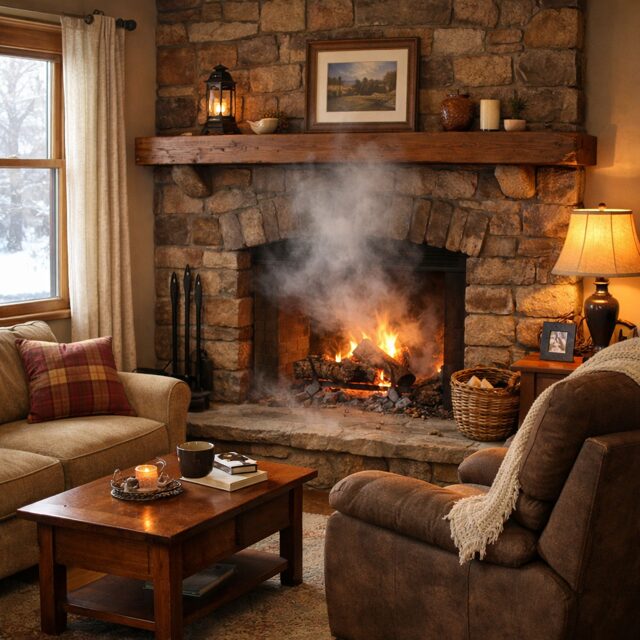
There’s nothing quite like relaxing by a warm fire on a cold Central Indiana evening—until smoke starts billowing into your living room instead of up the chimney. Whether you’re dealing with a cloud of smoke from lighting your fireplace or lingering odors after the fire is out, we understand this is both uncomfortable and potentially hazardous for your family.
If you’re facing a smoky situation right now, here’s what you need to know to clear it quickly and safely, plus how to prevent it from happening again.
Immediate Steps to Clear Fireplace Smoke from Your Home
When smoke enters your living space, quick action makes all the difference. Here’s what to do right away:
1. Check Your Damper First
Before doing anything else, make sure your fireplace damper is completely open. This might sound obvious, but it’s the most common cause of smoke entering the home—and if your damper is closed or only partially open, opening windows will only pull more smoke into your living space. Look up into your fireplace with a flashlight. You should see daylight coming down from the chimney. If the damper is closed, open it fully before proceeding to the next steps.
2. Stop Adding Fuel
If you’re still building the fire, stop adding wood immediately. Don’t add more logs or kindling until you’ve addressed the smoke issue and confirmed your damper is open.
3. Open Windows and Doors
Now that your damper is open, create cross-ventilation by opening windows and doors throughout the affected area. The more fresh air you can bring in, the faster the smoke will dissipate. If possible, open windows on opposite sides of the room to create a cross-breeze that moves smoke toward exits.
4. Turn On Fans Strategically
Position ceiling fans and portable fans to move air toward the open windows and doors. However, avoid turning on exhaust fans in your kitchen or bathroom while the fireplace is actively smoking, as these can actually worsen the problem by creating negative air pressure that pulls more smoke into the room.
5. Use Air Purifiers
If you have a HEPA air purifier, run it in the affected room. These devices are effective at capturing smoke particles and odors from the air, helping to clear the space more quickly and protecting your family from breathing in harmful particulates.
Removing Lingering Smoke Odors
Once you’ve cleared the visible smoke, you may still notice that smoky smell in your home. Here are natural, effective ways to eliminate odors:
Vinegar Absorption Method
Place shallow bowls of white vinegar around the room—one in each corner for a standard-sized room. Vinegar is a powerful natural deodorizer that absorbs smoke odors rather than just masking them. You can also mix equal parts water and vinegar in a spray bottle and mist the air, or spray a towel and wave it around to neutralize odors.
Baking Soda
Leave open boxes or bowls of baking soda near the fireplace for several days. Baking soda naturally absorbs odors and is particularly effective for smoke smells that have settled into fabrics and surfaces.
Activated Charcoal
Similar to baking soda, activated charcoal absorbs odors from the air. Place bowls of activated charcoal briquettes near the fireplace and leave them for several days.
Important: Avoid using scented sprays or air fresheners to cover up smoke smell. These products don’t eliminate the problem and often contain chemicals that can be irritating, especially for family members with asthma or respiratory sensitivities.
Why Is Smoke Coming Into My Home in the First Place?
Understanding why your fireplace is smoking helps you prevent the problem. Here are the most common causes Central Indiana homeowners experience:
Cold Chimney Backdraft
During our cold Indiana winters, the air inside your chimney can become extremely cold and dense—especially if your fireplace is on an exterior wall. This cold air is heavier than the smoke from your newly lit fire, creating a “cold plug” that pushes smoke back into your room instead of allowing it to rise up the chimney.
How to prevent it: Before lighting your fire, warm up the flue by holding a rolled-up newspaper or small piece of kindling near the damper opening and lighting it. Hold it there for a minute or two until you feel the draft reverse and warm air begin to rise. This creates an updraft that will help your fire burn cleanly from the start.
Blocked or Dirty Chimney
Creosote buildup, bird nests, leaves, and other debris can obstruct your chimney and prevent smoke from escaping properly. Even a partial blockage can cause significant smoke problems.
How to prevent it: Have your chimney professionally inspected and cleaned at least once a year. This is especially important before burning season begins each fall.
Air Pressure Issues
Modern homes in communities like Carmel, Fishers, and Noblesville are often well-sealed for energy efficiency. While this is great for your heating bills, it can create negative air pressure when your fireplace is burning. Your fireplace needs oxygen to burn, and if your home is sealed too tightly, it may pull air down the chimney instead of allowing smoke to escape upward.
How to prevent it: Try cracking a window near your fireplace when you light a fire. This small adjustment can balance the air pressure in your home and allow your chimney to draft properly. You might also notice this problem is worse when exhaust fans, your furnace, or your dryer are running—these appliances compete for air in your home.
Wet or Unseasoned Wood
Wood with high moisture content doesn’t burn hot enough to create the strong draft needed to pull smoke up your chimney. It also produces more smoke and creosote.
How to prevent it: Only burn seasoned firewood that has been dried for at least six months and has a moisture content below 20%. Properly seasoned wood is lighter in weight, has cracks in the ends, and the bark comes off easily. You can also purchase a moisture meter to test your wood before burning.
Improper Fire Building
Building your fire too far forward in the firebox or creating too large of a fire initially can overwhelm your chimney’s ability to draft properly.
How to prevent it: Build smaller fires toward the back of your fireplace. Use a fireplace grate if you have one—it lifts the fire higher in the firebox and closer to the chimney opening, giving smoke less opportunity to escape into the room.
When Fireplace Smoke Is a Health and Safety Concern
While an occasional puff of smoke when lighting a fire might just be annoying, persistent smoke problems require immediate attention. Fireplace smoke contains fine particles and gases, including carbon monoxide, that can irritate your lungs and pose serious health risks—especially for children, older adults, and anyone with asthma or other respiratory conditions.
If you experience any of the following, turn off or extinguish your fireplace and call a professional immediately:
- Smoke consistently enters your home every time you use the fireplace
- Your carbon monoxide detector goes off
- Family members experience headaches, dizziness, or difficulty breathing when the fireplace is in use
- You smell smoke or creosote when the fireplace is not in use
These symptoms could indicate serious problems with your chimney system, blocked flue, or dangerous carbon monoxide levels in your home.
Professional Solutions for Persistent Smoke Problems
If you’ve tried these troubleshooting steps and still experience smoke in your home, it’s time to call in a professional. A certified chimney sweep can identify issues that aren’t visible to homeowners, including:
- Structural damage to the chimney or flue
- Improperly sized dampers
- Chimney height issues (chimneys that are too short can’t vent properly)
- Need for a chimney cap to prevent moisture and debris entry
- Severe creosote buildup that requires professional removal
Some persistent backdraft problems may require mechanical solutions like installing an outside air vent for your fireplace or adding a chimney draft fan.
Keeping Your Central Indiana Home Smoke-Free This Winter
The key to enjoying your fireplace without the smoke is prevention. Make chimney inspection and cleaning part of your annual home maintenance routine, burn only dry seasoned wood, and pay attention to how your fireplace performs. Small adjustments—like warming the flue before lighting or cracking a window—can make the difference between a cozy evening and a smoke-filled room.
At Absolute Comfort, we understand that your home’s heating systems need to work together to keep your family comfortable and safe throughout Indiana’s cold winters. While we specialize in your furnace and HVAC systems rather than fireplace repair, we know that all your heating sources matter when it comes to keeping your Carmel, Fishers, or Noblesville home warm and healthy. Fireplace care, especially, impacts the air quality of your home.
If you’re experiencing issues with your primary heating system or have questions about indoor air quality, our team is here to help. Stay warm, stay safe, and enjoy those cozy fires—smoke-free.